Persian Cat Line Art: Graphics & Illustrations Review
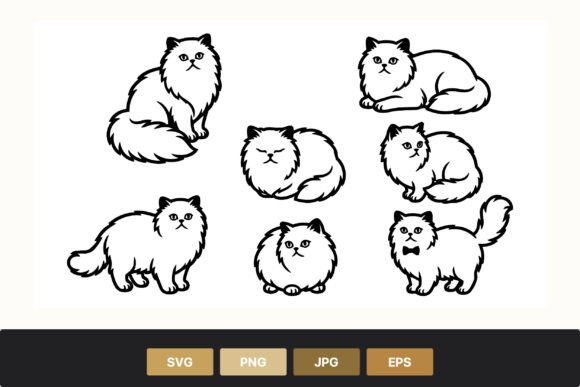
When I opened the Persian Cat Line Art Illustrations bundle for the first time, I was immediately struck by how much personality these black-and-white line drawings carry. As a designer who regularly pulls assets from creative marketplaces for client work, I have learned to spot the difference between a quick vector trace and a thoughtfully crafted illustration set. This collection of black and white persian cat illustrations showing different poses such as sitting standing and lying with one cat wearing a bow tie in line art style immediately felt like a graphic design asset with genuine potential for real-world commercial projects. The download package is provided as a clean set of files that integrate well into brand identity, packaging design, and editorial design workflows.
The mood here is playful yet refined. The line art style gives these cats a hand-drawn authenticity that feels current without being overly trendy. The pose variety—sitting, standing, lying, and that one cat wearing a bow tie—offers enough flexibility to use across multiple touchpoints without repeating the same visual. For a creative design professional evaluating whether this design bundle belongs in a client presentation, the answer depends on the project context. Let me walk through a realistic scenario to show you how I would think about this asset.
A Real Client Project and How This Illustration Set Fits
Imagine I am working with a small-batch pet treat company that makes handmade, grain-free cat treats. The brand is called Whisker & Vine. The client wants packaging that feels artisanal, warm, and slightly whimsical—something that stands out on a shelf full of clinical pet food bags. The creative direction calls for a handcrafted, modern vintage look with a lot of texture and charm. This is exactly the kind of project where the Persian Cat Line Art Illustrations could anchor the entire visual identity.
I placed the sitting cat pose on a kraft paper mockup with a simple serif logotype, and the result looked like it belonged in a boutique pet boutique. The line art style does not fight with typography or other design elements. It leaves room for the brand name, ingredient highlights, and a clean visual hierarchy. For a handmade business or small business branding project, this illustration set offers a ton of personality without overwhelming the layout. The bow tie cat, in particular, adds a touch of sophistication that could work well for a premium product line or a seasonal gift set.
Where This Asset Shines in Real Design Work
After testing the Persian Cat Line Art Illustrations across several layout types, I found it performs best in certain contexts. Here is where it stands out as a reliable commercial design asset.
Packaging and Product Labels
The line art translates beautifully to small label sizes. The thick enough strokes hold up at two inches wide, and the open interior spaces allow the product or background color to show through. For product mockup presentations, I used the standing cat on a circular label for a jar of catnip tea, and the simplicity of the line art kept the label readable and elegant. If you are designing for print-on-demand products like mugs, tote bags, or ceramic bowls, these illustrations will reproduce cleanly without losing detail.
Social Media and Digital Content
For social media graphics, the black and white nature of these illustrations makes them highly adaptable. I placed the lying cat pose on a soft pastel background for an Instagram post promoting a cat café event, and the high contrast gave the graphic immediate visual punch. The SVG design files allow easy color changes if you want to invert the artwork or use it as a mask. For Pinterest pins and blog visuals, these illustrations work as hero graphics that draw the eye without requiring a complex layout. They also integrate well into Canva templates for quick social media content creation.
Stickers, Printables, and Cricut Projects
This is where the Persian Cat Line Art Illustrations really flex their versatility. The line art is clean enough to cut on a Cricut machine for vinyl decals or iron-on transfers. I tested the bow tie cat on a white ceramic mug using sublimation, and the transfer was crisp with no jagged edges. For sticker design, the single-color line art is ideal for die-cut stickers that need to pop on a laptop or water bottle. The printable design potential extends to wall art prints, greeting cards, and party invitations. If you sell on Etsy, this set could form the basis of an entire product line of cat-themed digital product listings.
Editorial and Web Design
For editorial design, these illustrations work well as chapter openers, sidebar accents, or pull quote decorations. The line art style complements both serif and sans serif fonts without creating visual noise. In web design, the illustrations can be used as decorative elements on landing pages, about sections, or blog headers. The reduced file size of PNG design files with transparent backgrounds makes them web-friendly without sacrificing quality.
Where to Use Persian Cat Line Art With Care
No graphic design asset is perfect for every situation, and this illustration set has some limitations that designers should respect. The collection of black and white persian cat illustrations showing different poses such as sitting standing and lying with one cat wearing a bow tie in line art style is intentionally minimal, but that minimalism can become a weakness in certain contexts.
Small Sizes and Crowded Layouts
When scaled below one inch, the finer details of the line art—especially around the face and the bow tie—can become muddy or lose definition. If you are using these in a clipart capacity on a business card or a small product tag, test the print size carefully. In a crowded layout with multiple competing elements, the subtlety of the line art may get lost. For packaging design with a lot of copy, consider using the illustration as a standalone hero rather than a background texture.
Low Contrast and Minimalist Branding
Dark backgrounds work well, but light gray or mid-tone backgrounds can wash out the line art. If your brand identity relies on ultra-minimalist aesthetics with very low contrast, these illustrations might feel too decorative or busy. For a professional corporate materials project like a financial report or a legal brand, the playful cat motif is likely not the right fit. The illustrations are best suited for brands that embrace warmth, personality, and a handmade feel.
Complex Layering and Overprinting
When used in layered marketing visuals with multiple textures, photos, and typographic elements, the line art can get buried. I recommend using these illustrations on clean backgrounds or with a subtle drop shadow to separate them from busy layers. For sublimation design on patterned fabrics, test the contrast on a small sample first to ensure the cat remains the focal point.
Practical Designer Notes Before You Buy or Use
Before you commit to using the Persian Cat Line Art Illustrations in a client project, run through the following checklist. These are the same steps I take with any new design assets from a creative marketplace.
- Test it in black and white first. Print the illustration on a laser printer at 100% size and at 50% size. Check for any thin lines that might break, especially in the whiskers and tail details. The line art holds up well overall, but the bow tie cat has some fine detail around the bow that needs careful scaling.
- Check contrast on light and dark backgrounds. Place the black line art on a white background, a cream background, and a dark charcoal background. The illustrations work best on high-contrast surfaces. On mid-tone backgrounds, consider using a white version of the line art if the file format allows that flexibility.
- Preview at small and large sizes. The sitting pose scales down better than the standing pose because the composition is more compact. For large format applications like a poster or a window decal, the line art holds its shape well, but the simplicity of the style means it may feel too sparse for a hero graphic on a billboard or large signage.
- Place it on real mockups. I dropped the standing cat onto a product mockup of a canvas tote bag and a ceramic mug. The results were clean and professional. The line art does not warp or distort when applied to curved surfaces, which is a good sign for print-on-demand sellers.
- Test print quality. If you are using these for printable design or sticker design, print a test sheet on your intended paper stock. The line art should reproduce with sharp edges and no bleeding. I recommend using a high-resolution PNG design file for print and an SVG design file for web or Cricut use.
- Review file formats. Confirm that the download package includes both vector and raster formats. SVG design files are essential for scaling without loss, and high-resolution PNGs with transparent backgrounds are crucial for social media graphics and web design. If the set includes EPS or AI files, that is a bonus for brand identity work.
- Inspect PNG transparency. Open the PNG files in Photoshop or your editing software of choice. Check for any white halos or rough edges around the line art. The transparency should be clean and ready for use in Canva templates or marketing visuals.
- Check SVG editability. If you plan to modify the illustrations—changing the bow tie color, adjusting the tail position, or combining poses—open the SVG files in Illustrator or Inkscape. The paths should be clean and editable without excessive anchor points. This is particularly important for logo design or brand identity projects where you might need to customize the asset.
- Compare with font styles. Pair the illustrations with a serif font, a sans serif font, a script font, a handwritten font, and a display font. I found that the line art pairs beautifully with a rounded sans serif for a friendly look, or with a refined serif for a more upscale feel. Script fonts can work if the script is not too ornate, but handwritten fonts create a nice complementary texture.
- Confirm commercial licensing. Before using this asset for a client project, an Etsy product, or a print-on-demand store, read the license agreement carefully. Ensure the license covers commercial design use, brand identity applications, and product packaging. Some creative marketplace licenses limit the number of products you can create or require attribution. When in doubt, contact the seller directly.
Why This Asset Belongs in Your Creative Toolkit
As a designer who reviews graphic design assets regularly, I appreciate the Persian Cat Line Art Illustrations for its versatility, charm, and professional polish. The collection of black and white persian cat illustrations showing different poses such as sitting standing and lying with one cat wearing a bow tie in line art style offers a cohesive visual language that can strengthen a brand’s visual trust and emotional appeal. For small business branding, handmade business packaging, or print-on-demand product lines, this set delivers consistent quality across multiple applications.
The line art style is approachable enough for a local cat café flyer yet refined enough for a boutique product label. The black and white palette ensures that the illustrations work in monochrome printing, two-color branding, or full-color layouts. The pose variety gives you flexibility for different formats—horizontal for a website banner, vertical for a poster, square for an Instagram post. The modern design sensibility of the line art feels current without chasing trends that will date quickly.
For content creators, bloggers, and publishers, these illustrations can become a recurring visual signature across blog posts, social media, and digital products. For Cricut users and crafters, the clean line art translates into crisp cuts and clean transfers. For digital sellers on Etsy or other platforms, this set could form the foundation of a full product line, from stickers and mugs to printable wall art and gift tags.
Final Verdict for Client Work
I would confidently use the Persian Cat Line Art Illustrations in a client project where the brand voice calls for warmth, personality, and a handcrafted feel. The asset is particularly strong for packaging design, social media graphics, sticker design, and printable design projects. It requires thoughtful scaling and contrast planning, but those are standard considerations for any graphic design asset.
If you are a designer evaluating this set for a real client, I recommend downloading the sample files if available, testing them on a few mockups, and showing the client three different applications: a product label, a social media post, and a sticker sheet. The reaction will tell you everything you need to know about whether the Persian cat line art style resonates with the brand’s audience. In my experience, the creative design potential of this illustration set is strong enough to become a central piece of a brand’s visual identity, especially for cat-focused businesses, pet product lines, and lifestyle brands that want to feel approachable and memorable.