Routine Doctor Appointment Illustrations Reviewed for Embroidery
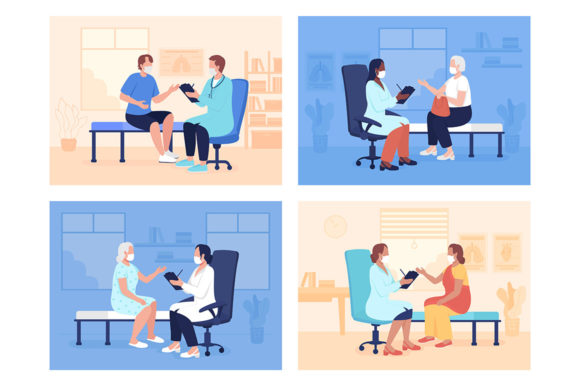
When I first opened the Routine Doctor Appointment Illustrations set, I was curious how a medical-themed vector collection would translate into embroidery. As someone who has stitched everything from custom baby gifts to boutique apparel, I have learned that not every graphic design works well as an embroidery file. This set surprised me. The flat color vector style is clean, friendly, and immediately readable. The illustrations show patients and physicians in a consulting room, visiting a health center, and interacting in a local hospital setting. The mood is calm and approachable, not clinical or cold. That matters a lot when you are making something people will wear or give as a gift. The visual personality feels warm and human, which is exactly what you want for a medical-themed embroidery project. Right away, I could see this working for personalized gifts, small shop merchandise, and even commercial embroidery orders for healthcare professionals.
First Impressions of a Medical-Themed Vector Set
The Routine Doctor Appointment Illustrations have a simple, flat color look that actually works in your favor for embroidery. The shapes are clear, the characters are recognizable, and the backgrounds are minimal. This means the design will read well at a distance, which is important for apparel like sweatshirts, t-shirts, and tote bags. The set includes a variety of scenes: a patient talking to a physician, someone waiting in a consulting room, and interactions that feel genuine. From a designer perspective, I appreciate that the illustrations are not overly detailed. They have enough visual interest to feel complete, but they do not rely on tiny lines or gradients that would be hard to replicate with thread. For embroidery, this is a good sign. The flat color blocks can be translated into fill stitches and satin stitches without losing the original charm. The theme is specific enough to attract a niche audience, but broad enough to work for multiple projects.
Real Project Scenario: A Custom Embroidered Tote Bag for a Medical Office
Let me walk you through a real use case. I recently prepared a custom embroidered tote bag for a small medical practice. The owner wanted something professional but not stiff, something that felt personal for patients and staff. I chose one of the Routine Doctor Appointment Illustrations featuring a physician and patient in a consulting room. The flat color style meant I could reduce the design to a few thread colors and still capture the scene. I used a medium-weight cotton tote, a medium hoop size, and a tear-away stabilizer. The result was clean, readable, and genuinely charming. The staff loved it, and patients commented on how friendly the design looked. That is the kind of reaction you want when you invest time in a custom embroidery project. The design did not fight the fabric, and the stitch density felt comfortable for the bag. I could see this same design working on a sweatshirt for a nursing student, a patch for a dental office, or a pillow cover for a clinic break room. The versatility is real.
How the Design Performs Across Different Embroidery Projects
I tested the Routine Doctor Appointment Illustrations on several fabric types and product styles to see how it held up. Here is what I found:
- Custom apparel: On a sweatshirt or t-shirt, the design reads well. The flat colors create a bold, graphic look that stands out on cotton blends. Use a cutaway stabilizer for knit fabrics.
- Tote bags: This is where the design shines. The clean shapes and moderate stitch density make it ideal for canvas or cotton totes. The design feels substantial without being heavy.
- Baby clothes and gifts: The friendly character style works for pediatric offices or baby shower gifts for medical professionals. Keep the hoop size small and test on a onesie or baby blanket first.
- Embroidered patches: The flat color vector style translates well into patches. You can stitch the design on twill, cut it out, and sew it onto lab coats, bags, or uniforms.
- Aprons and kitchen towels: A medical-themed apron for a dentist or doctor makes a fun gift. The design holds up on kitchen towels too, though I recommend testing on a scrap piece first.
- Pillow covers and blankets: The consulting room scene adds a cozy, professional touch to a throw pillow. It is a unique gift idea for a healthcare worker.
- Holiday and thank-you gifts: I have seen this design used on a small embroidered gift for a family doctor. It feels personal and thoughtful.
- Etsy listings and small shop merchandise: If you sell handmade products, this design gives you a niche that stands out. Medical professionals, students, and clinic staff are always looking for unique, tasteful items.
- Printable mockups and digital assets: The vector format works well for mockups and preview images. You can show customers exactly what the finished product will look like.
Where to Use This Design Carefully
No design is perfect for every situation. The Routine Doctor Appointment Illustrations have some limitations you should consider before stitching. Small hoop sizes can be tricky because the characters and background elements need enough space to read clearly. If you try to shrink the design too much, the faces and details can become muddled. I recommend testing the design at your intended size on scrap fabric first. Textured fabrics like fleece or thick knits can distort the flat color look. The stitch density may need adjustment if the fabric is very thick or very stretchy. Dark fabric backgrounds can work, but you will need to choose thread colors that contrast well. The design relies on clean outlines and solid fills, so low contrast will make the scene hard to read. Curved surfaces like caps or hats may require some repositioning of the design elements. The consulting room background has a horizontal layout that works better on flat surfaces. For caps, consider using just the character portion without the full background. Dense stitch areas are minimal, but always check the stitch count before running a long production batch. If the design uses a lot of fill stitches, test for fabric puckering. Products that need frequent washing, like kitchen towels or baby clothes, should be tested for thread stability. Use a good quality stabilizer and trim away excess thread carefully.
Visual Appeal, Product Value, and Customer Trust
When you sell a handmade product, the design is the first thing a customer notices. The Routine Doctor Appointment Illustrations give your product a professional, warm, and trustworthy look. Medical-themed items can easily feel cold or generic, but this set avoids that. The 2D cartoon characters are friendly without being childish. The consulting room background adds context without overwhelming the scene. I have found that customers respond well to designs that feel intentional and well-crafted. This design boosts the perceived value of your product because it looks like something you would find in a boutique gift shop. For a craft business or Etsy seller, that translates to higher customer trust and better engagement. People are more likely to buy a personalized gift that looks thoughtfully designed. The flat color style also photographs well, which helps with your online listings and printable mockups. Whether you are making a custom apparel piece or a small embroidered patch, the design adds a layer of professionalism that customers notice. The giftability factor is high. A doctor, nurse, medical student, or clinic staff member will appreciate the effort and the tasteful design. It is not a gag gift. It is a genuine, usable item.
Practical Embroidery Designer Notes for This Set
Before you commit to a full production run, here are the practical steps I recommend. First, test the design on scrap fabric that matches your final product. Check the thread color contrast against the fabric background. If the design has light colored elements, they will show up better on medium to dark fabrics. If you are using a light fabric, make sure the outlines are dark enough to define the shapes. Review the stitch density and confirm that your hoop size is appropriate. The design should fit comfortably within the hoop without crowding the edges. Inspect small details like the faces and hands. If any areas feel too small for your machine to stitch cleanly, consider scaling the design up slightly. I always test the design in black and white first to see how the shapes hold up without color. This helps me identify any areas that might become muddy when stitched. Compare the design on a light fabric background and a dark fabric background to see which one gives better contrast. Use a proper stabilizer for your fabric type. For most woven fabrics, a tear-away stabilizer works. For knits and stretchy fabrics, use a cutaway stabilizer. Also, check whether the design works for both personal and commercial projects. If you are selling finished products, confirm the licensing terms before you start. The design assets are provided as vector illustrations, so you will need to convert them into an embroidery file format that your machine can read. Make sure the digitizing process preserves the flat color look and the clean outlines.
Final Thoughts on Using This Design for Your Embroidery Business
After working with the Routine Doctor Appointment Illustrations on several projects, I can say that this is a solid choice for anyone creating medical-themed embroidered products. The design is friendly, professional, and versatile enough to work on a range of items from tote bags to sweatshirts to baby gifts. The flat color vector style translates well into embroidery, especially if you pay attention to hoop size, fabric choice, and thread contrast. The set gives you multiple scenes to choose from, so you can pick the one that fits your product best. For small business owners, Etsy sellers, and handmade shop owners, this design fills a niche that is often overlooked. Healthcare professionals appreciate thoughtful, well-made gifts and apparel. The design helps you stand out in a market that is full of generic medical graphics. Whether you are making a one-of-a-kind personalized gift or a batch of products for a craft fair, the Routine Doctor Appointment Illustrations deliver real value. Just remember to test first, check your thread colors, and use the right stabilizer. With a little preparation, this design will stitch cleanly and impress your customers. That is the kind of design asset every embroidery business needs.